
Posted: October 10, 2024
Unit Testing: Basic Concepts Exploration
#unit testing
Unit Testing: Basic Concepts Exploration
Unit testing is a software testing method where individual components of a program, known as "units," are tested in isolation. The goal is to verify that each unit of the software performs as expected. A unit is typically the smallest testable part of an application, often a function, method, or object.
Key Concepts in Unit Testing:
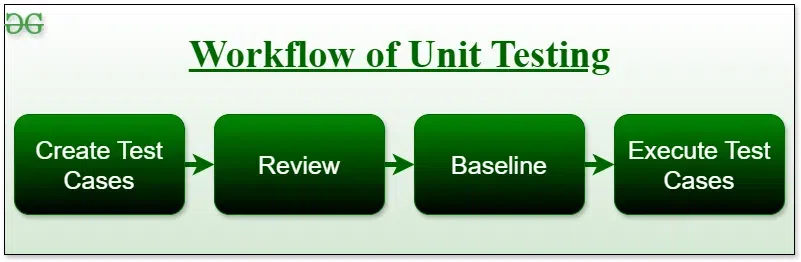
- Test Cases: A unit test is written as a test case, which includes input values and expected outputs. If the actual output matches the expected output, the test passes; otherwise, it fails. Each test case is designed to validate a specific behavior of the unit.
- Assertions: In unit tests, assertions are used to compare the actual output of the code with the expected output. For example, an assertion might check if a function returns the correct value or if an object is initialized properly.
- Test Isolation: Unit tests focus on testing a single unit in isolation from the rest of the system. Any dependencies, such as databases, external services, or other modules, should be mocked or stubbed to avoid interference and to test the unit in a controlled environment.
- Mocking and Stubbing: Mocking is used to simulate the behavior of complex objects or external systems that a unit may interact with. Stubs provide predefined responses for certain methods. Both techniques allow tests to focus solely on the unit’s behavior.
- Test-Driven Development (TDD): TDD is a software development approach where tests are written before the actual code. In this method, developers write unit tests first and then create the code necessary to pass the tests. It encourages better design, modular code, and fewer bugs.
- Automated Testing: Unit tests are often automated to ensure that tests are consistently run after every code change. Automation allows developers to detect errors early in the development process, preventing issues from propagating to later stages.
Benefits of Unit Testing:
- Early bug detection.
- Ensures code quality.
- Facilitates refactoring.
- Provides documentation of code behavior.